
Ingredients · 5 min read · 18 November 2026
Why sea buckthorn? Resilience in a berry
Our name means the inner force that carries you forward. The fruit we built it on lives that idea — for people and for the land.
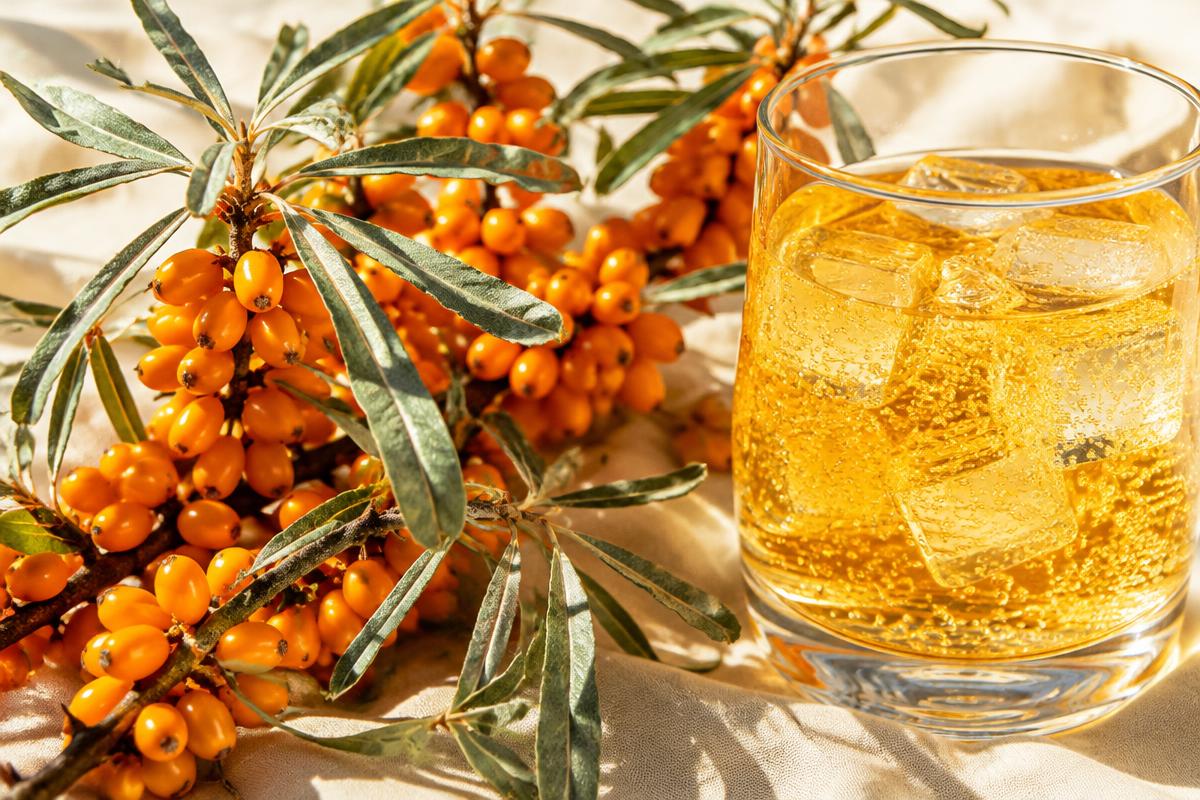
Sea buckthorn was not chosen only for its taste or its story. On its own scientific merits it is an unusually well-suited ingredient — nutritionally distinctive for people, and ecologically distinctive as a plant.
Benefits for people
The berries are exceptionally nutrient-dense. Peer-reviewed reviews report 360–2,500 mg of vitamin C per 100 g of fresh fruit, against roughly 50 mg for an orange (Acta Veterinaria Brno). The berry oil is also one of the very few known plant sources of omega-7 (palmitoleic acid), reported at roughly 30–53% of the fatty acids in pulp oil (Yang & Kallio, Journal of Agricultural and Food Chemistry). It is rich in vitamin E, carotenoids and flavonoids such as quercetin and isorhamnetin.
Benefits for the land
Sea buckthorn is an actinorhizal plant: it hosts Frankia bacteria in its roots, drawing nitrogen from the air into poor soil. A 2025 study in Plant and Soil found that sea buckthorn plantations on reclaimed land greatly enhanced soil function and increased plant biodiversity. Tolerant of drought and cold, it is used as a pioneer species in land restoration — including in Mongolia, through projects backed by the Swiss Agency for Development and Cooperation and the UNDP.
Why we chose it
It gives KHIIMORI a real nutritional story, a true cultural anchor and a sustainability story that is lived rather than performed. Resilience is the theme of the brand, the meaning of its name and, quite literally, the biology of its main ingredient.
A note on claims
We describe what the fruit contains and how it has traditionally been used. We do not present KHIIMORI as treating or preventing any condition.
Get the next story first
Join the KHIIMORI newsletter.